How to choose a retouching partner: what actually predicts year five
You are about to hand your product catalog to a company you have never worked with, usually in another country, on the strength of a portfolio page and a price per image.
Most buyers know how to judge the first batch. Few know how to judge what costs them money later, which is the relationship in year 3, after both teams have changed and nobody left on either side remembers what was agreed.
We have been doing this since 2006. Here is what we have seen predict how year 3 goes, and what to ask before you sign.
The only number that matters is how long they stayed
Every retouching vendor will show you a portfolio. Almost none will tell you their retention.
We are not publishing our books either, but we can describe them. Across 20 years, roughly 4 out of every 5 dollars we have billed came from clients somebody else introduced to us.
That matters because of what a referral is. Nobody refers a vendor after one good batch. They refer one after years of not having to think about it. So referral share tells you, after the fact, which relationships held. It is the closest thing to an honest quality score a studio can give you.
Ask any partner you are considering what share of their work comes from someone vouching for them.
First, notice whether they can answer at all. Then look at the answer. A studio that grew mostly through cold outreach and marketplace listings has shown that it is good at winning work. You have no evidence yet that it is good at keeping it.
What 15 years actually looks like
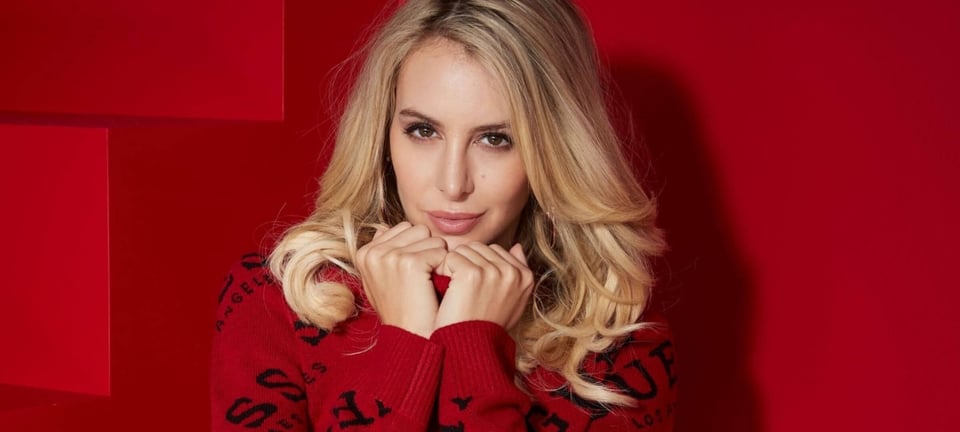
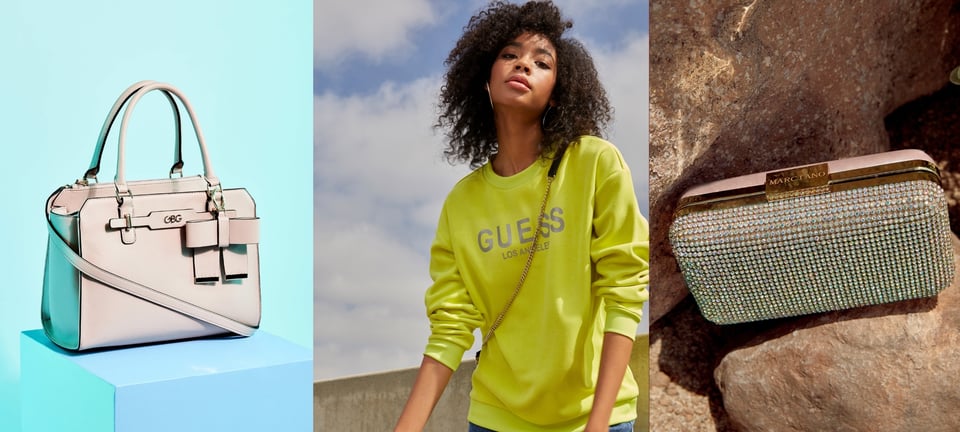
GUESS has been a client since 2011. That is more than 350,000 images since then, held to one standard through their reorganizations and ours.
Steve Madden was a client for 13 years, from 2006, our first year, until 2019.
We include that one on purpose, because it ended. Long relationships don't all run forever, and a studio that implies otherwise is selling you something. It ran for 13 years first, which is roughly 12 years longer than most agency relationships in this category last.
Neither relationship lasted because of a portfolio. They lasted because of how the ordinary days went. A brand that has worked with you for over a decade has seen you through its own reorganizations, at least one platform migration, several art directors and a few bad weeks. Good work was never the hard part.
The standard is institutional memory
After years on one brand, a studio knows things no style guide contains. What that specific denim wash should look like. How much texture the brand keeps in skin. Which product lines get warmer treatment, and why.
That knowledge builds with every batch, and none of it moves with you to a new vendor. Switch to save 15% per image and you start again from zero, then pay for the relearning in revision rounds for the next 6 months.
That is the real switching cost, and almost nobody prices it into the decision.
Consistency beats brilliance
The most common mistake we see in this category is a studio optimizing for the hero shot.
An e-commerce catalog does not need one spectacular image. It needs 400 images that look like they came from the same place. If image 7 on a product page has a slightly different white balance from image 2, the page looks amateur even when every file is technically excellent, and customers notice before they can say why.
So test the variance across their worst 20 images, not the quality of their best one.
When a test batch comes back, skip the best file. Open 5 files at random, side by side, and compare background value, shadow density and white balance. That variance is what you will live with for the next 3 years.
Trust is operational, not sentimental
Long relationships don't depend on people liking each other. They depend on the client not having to check.
One question tests that faster than any other. Who performs quality control, and is it the same person who did the retouching?
If it is the same person, there is no quality control, only a second look by someone who stopped seeing the file 3 hours ago. In our studio a different person from the retoucher does the QC pass on every batch, and it is the stage we protect hardest when a deadline tightens.
The other half of operational trust is who raises the problem. In a relationship that lasts, the studio tells the client something went wrong before the client finds it. That is a policy, and you can ask a vendor whether they have one.
Absorbing change is part of the service
Over 15 years a client changes platforms, teams, art directors and now toolchains. The studio has to absorb each change without dropping the standard.
AI is the latest of these changes. We work AI-accelerated and human-verified. We added AI passes where they speed up the work and kept human finishing where the brand's look is decided. The client should notice the speed and never see where the machine stopped and the retoucher started.
Ask a prospective partner how they handled the last major change in this industry. If they cannot name one, they have not been around long enough to live through one.
What to ask before you sign
5 questions that tell you more than any portfolio review:
- What share of your revenue comes from clients who were referred to you? The honest answer predicts retention better than anything on their website.
- Who performs QC, and is it the same person who did the retouching? If they hesitate, there is no QC stage.
- What is your longest active client relationship, and can I speak to them? Length matters. Willingness to connect you matters more.
- What happens when you miss a deadline? Listen for a described process, not a promise that it never happens.
- Who owns the style guide, and what happens when my team changes? The answer tells you whether your account lives in a document or in one person's head. If it lives in a person, the relationship ends when they leave.
How to run a test batch that tells you something
Most test batches are designed to pass. Design one that can fail.
- Send real files, not your cleanest ones. Your best-lit, simplest frames tell you nothing. Send the awkward angles, the difficult fabrics and the frame your team argues about.
- Send enough for variance to show. Under 20 images, you are testing effort, not process. Anyone can hand-finish 8 files.
- Pay for it. A free sample gets their best person, out of hours, at a pace nobody can sustain. A paid batch goes through their real pipeline, which is what you are buying.
- Give a deliberately incomplete brief. Leave one spec ambiguous on purpose. A good studio asks. A weak one guesses, and you find out in month 4.
- Run it against your current vendor on the same files. Compare turnaround, revision count and consistency across the batch, not which single image you prefer.
Warning signs in year one
The relationships that failed usually showed it early, and in the same ways:
- Quality drifts after the first two batches. The first delivery was an audition, not the standard.
- The same correction has to be given twice. Nothing was written down. Every note you give should go into their style guide permanently.
- You only hear from them when they need something. Nobody flags a problem early or sends a status update before you ask.
- Your point of contact changes without a handover. Watch quality over the following 3 weeks. It tells you whether your account lives in a system.
- The price keeps being renegotiated downward. A vendor cutting its own margin to keep your account will soon cut something else.
Frequently asked questions
How long should a retouching partnership take to settle in?
Expect real friction for the first 2 to 3 batches while the style guide gets built from your corrections. The test is whether you have to give the same correction twice. By batch 4 the number of notes should be falling sharply. If it isn't, the studio is not writing anything down.
Is it better to use one retouching partner or several?
Several vendors give you leverage and redundancy, and cost you consistency, which is usually what you were buying in the first place. A common middle path is one primary partner holding the catalog standard and a second for overflow, briefed from the same style guide.
What should I be paying for e-commerce retouching?
Enough to cover a separate QC stage. Per-image pricing below roughly a dollar cannot include a senior second pass, because that pass does not scale. Ask what the price includes, not only what the number is.
How do I stop knowledge walking out the door when someone leaves?
Insist that the studio keeps the style guide as a living document, updated with every correction, and that you get a copy. If exactly one retoucher understands your account, you have a dependency, not a partner.
Does AI change any of this?
It changes which passes are manual. It does not change who is accountable for the file that ships. Ask any vendor that leans on AI who makes the final call, and what happens when the model gets it wrong at volume.
The question that actually predicts year five
If you are choosing a retouching partner, ask how old their longest relationship is, then ask to speak to that client.
Most studios can show you a portfolio. Few can put you in touch with a client of ten years.
Choosing a retouching partner and want to put those five questions to us? Talk to us.